
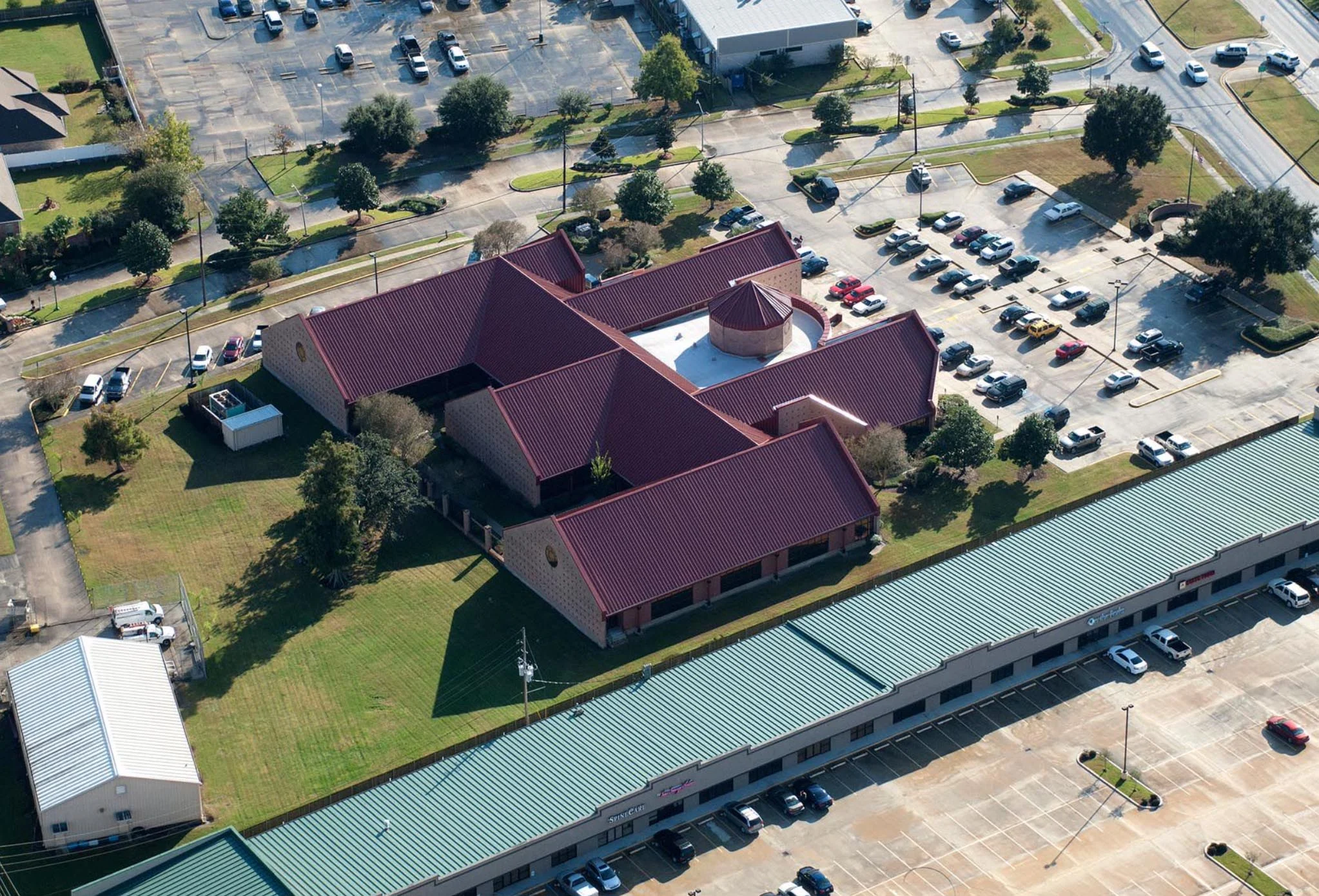
Fargo Public Schools, the largest school district in North Dakota with more than 11,000 students across campuses throughout the city, manages a facility portfolio defined by the most demanding winter roofing environment of any major urban school district in the continental United States. Extreme cold temperatures, high snow loads, ice dam formation, and spring freeze-thaw cycling create a roofing environment in Fargo that tests every component of a school building's assembly every single winter. Our commercial roofing team specializes in K-12 institutional roofing throughout North Dakota and we have designed our company around the specific demands of this climate.
Snow load engineering is the first technical consideration on every Fargo school roofing project because North Dakota's ground snow loads require structural verification before any new roofing system is installed. A heavier insulation package, a new membrane layer over an existing one, or a change in roof slope can add meaningful dead load to a roof structure that was designed decades ago to carry only its original assembly. We verify structural compatibility on every project, coordinate with licensed structural engineers when load questions arise, and document our analysis for the district's facilities records. This discipline has prevented structural problems that less thorough contractors create by overlooking load calculations.
Summer scheduling in Fargo school districts is tight because the academic year in North Dakota typically begins in late August and the reliable construction window runs from early June through mid-August. That twelve-week window is compressed further by the need to complete all work in time for the building to be fully prepared for occupancy, and it can be shortened further by North Dakota's unpredictable summer weather. We plan every project to be complete by August 1 at the latest, giving the district three weeks of buffer before the school year begins.
Ice dam formation is a specific and recurrent problem for Fargo school buildings, particularly in older buildings where attic insulation and ventilation have not kept pace with current standards. When heat escapes from conditioned school spaces into inadequately insulated attic assemblies, it drives snow melting at the ridge and ice dam formation at the cold eaves. The resulting ice backup can force water under roofing materials and into wall and ceiling assemblies in quantities that cause serious interior damage. We address ice dam risk comprehensively — with ice and water barrier at all eaves and transitions, insulation upgrades, and ventilation improvements that reduce the heat loss driving the problem.
Budget cycles for Fargo Public Schools are tied to the North Dakota state fiscal year and the district's local tax levy cycle, and successful participation in this market requires familiarity with both funding streams and their respective procurement requirements. We provide proposals in formats compatible with the district's capital planning processes, maintain the bonding and insurance coverage that public school construction requires, and participate in competitive bidding with full compliance with North Dakota public procurement law.
Safety on North Dakota school construction sites includes specific cold-weather protocols that are not required in milder climates. Although we target summer completion for major projects, spring and fall maintenance work may occur in temperatures that require worker protection measures, and any work in freezing conditions requires material handling and installation techniques specific to cold weather applications. Our crews are trained for cold-weather roofing and we never install materials in conditions that compromise their performance.
Insulation performance is critical for Fargo school buildings because North Dakota's heating season is long and severe, and the energy cost of inadequate roof insulation is significant. Current IECC Climate Zone 7 requirements demand high R-values for low-slope roofing, and we design insulation packages that meet or exceed those requirements. The energy savings from an upgraded insulation package on a Fargo school building can be substantial and measurable, and we document the expected performance for district administration and school board presentations.
Spring flooding is a consideration unique to the Red River Valley. Fargo has experienced major flood events in recent decades, and some school buildings in low-lying areas have experienced basement and first-floor flooding. While roofing cannot address flood events of that scale, proper roof drainage that prevents water accumulation on the roof deck adds structural load during spring snow melt periods, and we design drainage capacity accordingly.
From the large comprehensive high school campuses of Fargo South and Fargo North to the elementary schools distributed across the city's neighborhoods and new growth areas, our team serves the full building portfolio of Fargo Public Schools with the cold-climate expertise and institutional roofing focus that North Dakota's most challenging roofing environment demands.
- How does Fargo's extreme cold affect roofing material selection for school buildings?
- We specify materials rated for Climate Zone 7 cold temperatures — fully adhered TPO or modified bitumen for low-slope applications, standing seam metal for steep-slope sections, and insulation products that maintain their R-value at extreme cold temperatures. We do not install membrane systems below 40 degrees Fahrenheit regardless of schedule pressure.
- What snow load verification process do you follow for Fargo school roofing projects?
- We calculate the dead load of the proposed system, compare it against the existing system's dead load, review available structural drawings where they exist, and engage a licensed North Dakota structural engineer when load questions arise. We document this analysis for the district's facilities records and we never install a heavier system without completing the verification.
- How do you address ice dam formation on Fargo school buildings?
- We take a whole-system approach — installing self-adhering ice and water barrier at all eaves and transitions, evaluating and upgrading attic insulation to current IECC Climate Zone 7 standards, and improving ventilation where inadequate airflow is contributing to the problem. Fixing the roofing layer without addressing the thermal deficiency that drives ice dam formation is not an effective solution.
- What is the ideal construction window for Fargo school roofing projects?
- June 1 through August 1 is our target window for major project completion. This gives us twelve weeks of reliable summer weather and delivers the finished project to the district with three weeks of buffer before the school year begins. Emergency and maintenance work can be performed in the fall or spring, but major replacement projects should be summer-only in this climate.
- How do you help Fargo Public Schools plan a multi-year roofing capital program?
- We provide comprehensive condition assessments across the district's entire building portfolio, rating each building's roofing system condition, estimated remaining life, and projected replacement cost. This data gives district administration and school board members the information they need to prioritize investments and build a defensible multi-year capital plan that addresses the most urgent needs systematically.
Questions Building Owners Ask
What usually changes the price for acrylic and silicone roof coatings?
For acrylic and silicone roof coatings, access, wet insulation, deck repair, edge metal, drains, temporary protection, after-hours work, and occupied-building staging change the number faster than the roof label. We verify those acrylic and silicone roof coatings conditions around Casselton before treating a square-foot price as reliable.
Can acrylic and silicone roof coatings be handled while the building is occupied?
Often, but the acrylic and silicone roof coatings sequence has to be planned. We review entrances, loading docks, patient or tenant areas, roof access, odor sensitivity, and weather windows near Veterans Boulevard Corridor before recommending daytime, phased, or after-hours work.
How do we know if acrylic and silicone roof coatings should be repair, coating, recover, or replacement?
We look at acrylic and silicone roof coatings through wet insulation, deck condition, attachment, slope, seam condition, drain performance, and edge-metal risk. If the roof around June normal precipitation of 4.29 inches is dry and stable for acrylic and silicone roof coatings, preservation options stay on the table. If moisture or deck damage is spreading through acrylic and silicone roof coatings, replacement planning becomes more defensible.
What documentation do we get after a acrylic and silicone roof coatings inspection?
Typical acrylic and silicone roof coatings documentation includes roof-area notes, photo locations, leak or damage observations, priority levels, repair limits, access constraints, and budget categories. On storm work tied to acrylic and silicone roof coatings, we provide contractor-side roof evidence without promising insurance outcomes.
How quickly can you look at acrylic and silicone roof coatings after a leak or storm?
Timing for acrylic and silicone roof coatings depends on weather, crew load, access, and whether interior water is active. We triage emergency conditions first, especially when water is entering occupied space near healthcare campus roofs, and then separate temporary dry-in from permanent scope.