
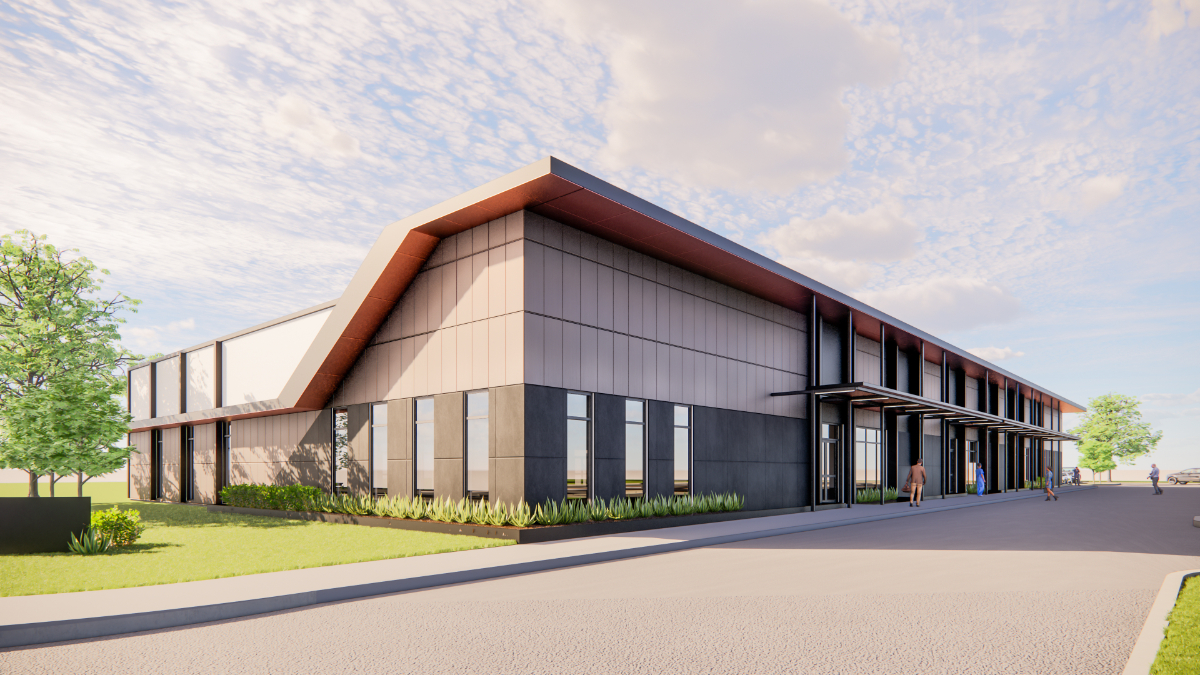
Fargo, North Dakota hosts the region's most critical healthcare infrastructure, centered on Sanford Medical Center Fargo — the largest hospital in the Dakotas — along with Essentia Health and a growing network of specialty clinics and ambulatory surgery centers concentrated along 32nd Avenue South and expanding into West Fargo. These facilities operate in one of the most climatically severe environments in the continental United States, where winter temperatures routinely drop below minus twenty degrees Fahrenheit and spring snowmelt events can saturate the Red River Valley with flooding that tests drainage systems throughout the region. For commercial roofing professionals serving Fargo's healthcare market, climate resilience is not a selling point — it is a baseline survival requirement for every system installed.
Sanford's main Fargo campus encompasses millions of square feet of clinical space, research facilities, and administrative buildings with roof assemblies that range from original construction to recently completed additions. The thermal stress imposed on these rooftops across a Fargo winter is extreme: a roof membrane that starts the season at sixty degrees in late September may be exposed to a combined temperature range exceeding one hundred and fifty degrees by mid-January. Expansion and contraction at that magnitude stresses every seam, termination, and penetration flashing in the assembly. TPO and EPDM systems specified for North Dakota healthcare buildings must carry cold-temperature flexibility ratings appropriate for actual Fargo conditions, not just temperate climate industry averages.
Snow loads on Fargo healthcare rooftops represent a structural and waterproofing concern that facilities managers must address proactively. North Dakota's heavy, wet spring snowfall can accumulate at rates that exceed design load assumptions on older buildings, and the uniform snow load requirements for healthcare facilities in the Fargo area reflect decades of historical data about regional snow events. When a late-season blizzard deposits two feet of wet snow on a flat hospital roof, the weight and subsequent snowmelt infiltration potential are both serious concerns. Roofing systems with adequate slope-to-drain geometry, properly sized interior drain leaders, and maintained clear drainage pathways handle these events; systems that have compromised drainage due to deferred maintenance do not.
Sterile environment protection during Fargo winters presents unique challenges. When roofing repair work is needed during the heating season — which can span October through April in the Red River Valley — contractors must work in conditions that affect adhesive cure times, membrane flexibility, and sealant performance. Cold-temperature installation requirements for TPO heat-welded seams, modified bitumen torched applications, and two-component urethane sealants all change significantly below freezing, and improper cold-weather application is a leading cause of warranty disputes on North Dakota healthcare facilities. Healthcare roofing contractors in Fargo must be experienced with proper cold-weather installation procedures rather than treating them as exceptional circumstances.
The expansion of Essentia Health's outpatient clinic network across the Fargo-Moorhead metro has brought new medical office building roofing projects to both the North Dakota and Minnesota sides of the Red River. These facilities — designed for chronic care management, imaging services, and ambulatory procedures — contain clinical areas where moisture intrusion carries the same contamination risks as larger hospital buildings, even if the building footprint is smaller. A water stain on the ceiling of a pre-operative holding area at a Fargo surgical center triggers the same Joint Commission environment of care questions that a leak over an operating room at Sanford would. Smaller healthcare facilities deserve the same specification rigor as major hospital campuses.
Medical gas penetrations through hospital rooftops in Fargo's freeze-thaw environment require flashing details that can accommodate both the thermal movement of the piping itself and the structural movement of the roof deck below. Oxygen, nitrous oxide, medical air, and vacuum system risers are fixed to the structure at multiple points, and differential movement between building elements can open gaps in standard flashing assemblies over time. Properly engineered escutcheon plates, flexible membrane collars, and secondary sealant lines at medical gas penetrations are not overspecification — they are the difference between a durable installation and an annual repair cycle that puts clinical operations at risk every time a contractor needs access to the roof in subzero conditions.
Fargo's assisted living and long-term care facility sector has grown substantially alongside the region's aging population, with facilities operating along Sheyenne Street in West Fargo and throughout the southern Fargo residential corridors. These buildings typically have simpler roof geometries than acute-care hospitals, but the resident populations they serve are among the most vulnerable to environmental disruptions. A heating system compromised by a roof leak that floods an air handler during a January cold snap in Fargo is not a comfort issue — it is a life safety emergency. Roofing maintenance programs for long-term care facilities in the Fargo area should be scheduled with the North Dakota winter timeline in mind, completing all significant repairs before October to avoid cold-weather complications.
The investment case for preventive roofing maintenance programs at Fargo healthcare facilities is particularly strong given the cost and difficulty of emergency repairs during North Dakota winters. An emergency roofing crew mobilizing on a healthcare building during a January blizzard in Fargo faces access challenges, material limitations, and installation constraints that can easily triple the cost of work that would be straightforward in warmer months. Facilities managers at Sanford, Essentia, and the region's independent medical campuses who implement rigorous bi-annual inspection programs and address identified deficiencies during the September-October window consistently avoid the emergency winter repair scenarios that consume budget and disrupt operations.
Commercial roofing contractors competing for healthcare work in Fargo should demonstrate specific North Dakota winter installation experience, familiarity with cold-temperature membrane and adhesive performance data, and a track record of successful projects at comparable medical facilities in the region. North Dakota contractor licensing, appropriate insurance coverage for healthcare environments, and established relationships with Fargo's healthcare facilities management community are practical indicators of contractor qualification. The stakes of getting roofing wrong on a critical access hospital or a rural healthcare clinic serving communities across a large geographic area are high, and the contractors trusted with this work earn that trust through demonstrated competence in the specific conditions Fargo presents.
- What makes hospital roofing in Fargo different from other commercial roofing projects?
- Fargo's extreme temperature range — from summer highs above ninety degrees to winter lows below minus twenty — subjects hospital roof assemblies to thermal cycling stress that exceeds what most commercial roofing specifications are designed around. Combined with heavy snow load requirements, the sterile environment protection demands of healthcare occupancies, and the continuous operation requirements of hospitals, Fargo healthcare roofing requires contractors with specific regional experience in both cold-climate installation techniques and healthcare compliance protocols. Standard commercial roofing contractors without this dual experience base frequently encounter problems on healthcare projects in North Dakota.
- How does snow load affect Fargo hospital rooftops?
- North Dakota's ground snow load values are among the highest in the Great Plains region, and wet spring snowfall events can rapidly approach or exceed design load thresholds on older hospital buildings. Beyond structural concerns, accumulated snow creates prolonged ponding conditions as it melts, testing drain capacity and membrane integrity at the same time. Proactive snow removal protocols for healthcare facilities with load-sensitive roofs, combined with maintained drainage pathways, reduce both structural risk and post-melt water infiltration exposure.
- Can roofing repairs be performed on a Fargo hospital during winter?
- Emergency repairs can and must be made during winter when leaks threaten patient safety or facility operations, but the conditions impose significant limitations on installation quality. Cold-temperature adhesive cure times are extended, membrane flexibility is reduced, and heat-welded seams require careful temperature management. Wherever possible, Fargo healthcare facilities benefit from completing identified roofing repairs during the September-October window before winter conditions set in, reducing the need for emergency winter repairs that cost more and carry higher quality risk.
- What roofing systems are best suited for Fargo's healthcare buildings?
- Fully adhered TPO and two-ply SBS modified bitumen systems are commonly specified for Fargo healthcare facilities because both offer strong cold-temperature performance when properly selected and installed. System selection should be based on a building-specific assessment of existing conditions, penetration complexity, drainage geometry, and R-value requirements under North Dakota energy codes. Low-slope roof systems with adequate insulation depth perform significantly better than minimally insulated assemblies in Fargo's extreme climate.
- How should Fargo healthcare facilities structure their roofing maintenance programs?
- Bi-annual professional inspections — one in September before freeze conditions begin and one in May after snowmelt season — align with North Dakota's climate calendar and provide the best opportunity to address deficiencies when repair conditions are favorable. Post-blizzard inspections following major snow events are an additional practical requirement for flat-roofed healthcare buildings in the Fargo area. Infrared moisture surveys every three to five years provide subsurface condition data that visual inspections cannot capture, supporting accurate capital planning for eventual roof replacements.
Questions Building Owners Ask
What usually changes the price for acrylic and silicone roof coatings?
For acrylic and silicone roof coatings, access, wet insulation, deck repair, edge metal, drains, temporary protection, after-hours work, and occupied-building staging change the number faster than the roof label. We verify those acrylic and silicone roof coatings conditions around Casselton before treating a square-foot price as reliable.
Can acrylic and silicone roof coatings be handled while the building is occupied?
Often, but the acrylic and silicone roof coatings sequence has to be planned. We review entrances, loading docks, patient or tenant areas, roof access, odor sensitivity, and weather windows near Veterans Boulevard Corridor before recommending daytime, phased, or after-hours work.
How do we know if acrylic and silicone roof coatings should be repair, coating, recover, or replacement?
We look at acrylic and silicone roof coatings through wet insulation, deck condition, attachment, slope, seam condition, drain performance, and edge-metal risk. If the roof around June normal precipitation of 4.29 inches is dry and stable for acrylic and silicone roof coatings, preservation options stay on the table. If moisture or deck damage is spreading through acrylic and silicone roof coatings, replacement planning becomes more defensible.
What documentation do we get after a acrylic and silicone roof coatings inspection?
Typical acrylic and silicone roof coatings documentation includes roof-area notes, photo locations, leak or damage observations, priority levels, repair limits, access constraints, and budget categories. On storm work tied to acrylic and silicone roof coatings, we provide contractor-side roof evidence without promising insurance outcomes.
How quickly can you look at acrylic and silicone roof coatings after a leak or storm?
Timing for acrylic and silicone roof coatings depends on weather, crew load, access, and whether interior water is active. We triage emergency conditions first, especially when water is entering occupied space near healthcare campus roofs, and then separate temporary dry-in from permanent scope.