
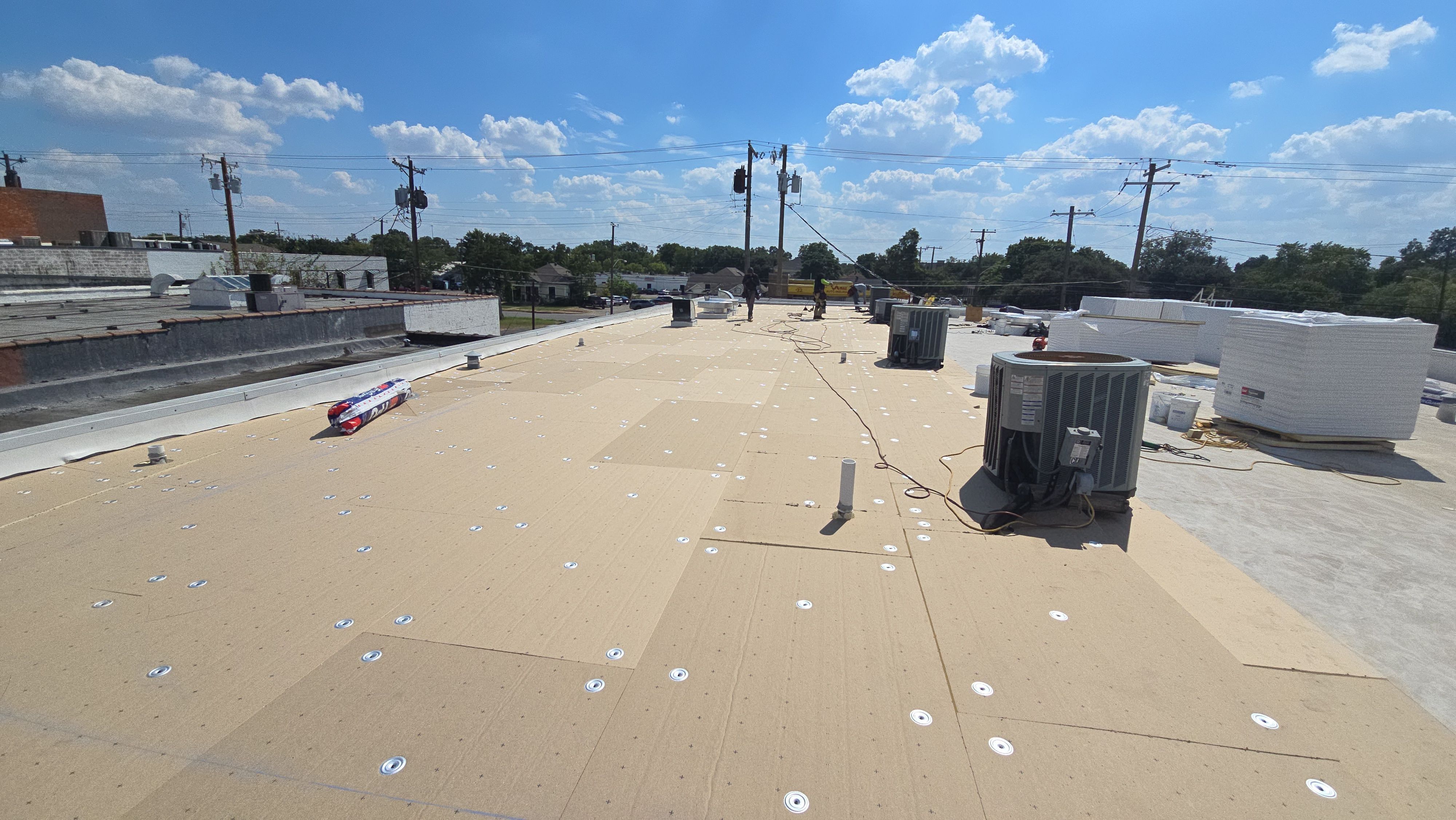
Fargo, North Dakota places roofing contractors into one of the most climatically demanding environments on the continent. The Fargo City Hall on 4th Street North, the Cass County Courthouse on 2nd Avenue North, the Fargo Public Library main branch, and the fire stations operated by the Fargo Fire Department all endure winters where temperatures regularly fall below minus 20 degrees Fahrenheit, where blizzards can deposit feet of snow in 24 hours, and where the Red River Valley's spring snowmelt creates flooding pressure that tests every building envelope. Then summer arrives and temperatures climb above 95 degrees, creating a thermal cycling range that approaches 120 degrees Fahrenheit across the calendar year. No other climate in the lower 48 places more stress on roofing materials and fastening systems.
The City of Fargo Purchasing Department administers competitive procurement for public facility work under North Dakota Century Code Chapter 48-01.2, which governs public improvements in the state. Projects above the statutory threshold require competitive sealed bids, advertised in a newspaper of general circulation in Cass County and posted on the city's procurement website. North Dakota does not maintain a centralized state procurement portal comparable to some other states, so contractors must monitor individual agency websites to track solicitations in the Fargo area. Cass County conducts its own procurement through the county commission's administrative process, and contractors pursuing both city and county work in Fargo must maintain separate registration relationships with each entity.
North Dakota enacted a state prevailing wage law in 1991 that applies to public construction projects funded by the state or a political subdivision. The North Dakota Department of Labor and Human Rights sets wage rates by craft classification, and roofing is a covered trade. Prevailing wage rates apply to all City of Fargo and Cass County construction contracts above the threshold, regardless of whether federal funds are present. When federal funding is involved, federal Davis-Bacon rates apply in addition, and contractors must use the higher of the two rate sets for each trade classification. The North Dakota DOL's prevailing wage enforcement unit conducts periodic audits of certified payroll records and can assess back wages and penalties for violations.
Snow load is the primary structural design driver for roofing on Fargo public buildings. North Dakota Building Code snow load requirements are among the highest in the continental United States, and Fargo's location in the Red River Valley means that wet, heavy spring snowfalls can accumulate rapidly on flat or low-slope roofs. Tapered insulation systems that create positive drainage are mandatory on virtually all Fargo public facility roof replacements, because flat roofs that accumulate ponding water create ice lenses that add dead load, accelerate membrane degradation, and block interior drains. Standing seam metal roofing is preferred on pitched or semi-pitched sections of fire stations and other civic buildings because it sheds snow passively and avoids the ice damming that plagues lower-slope assemblies in Fargo winters.
Thermal performance is the dominant energy criterion in Fargo's public facility roofing specifications. North Dakota falls in ASHRAE climate zone 7, one of the two most severe cold-climate designations in the continental United States, and energy code minimum insulation requirements for low-slope roofing in this zone are substantially higher than in more temperate regions. The current North Dakota energy code requires minimum R-30 continuous insulation for low-slope roofs in climate zone 7 above the deck, and specifications for publicly funded facilities often exceed this minimum to reduce long-term heating costs. Air barrier systems that minimize infiltration through roof penetrations, expansion joints, and curb flashings are increasingly common in Fargo facility specifications because the heating cost savings in a climate this cold justify the upfront investment.
Historic preservation considerations apply to Fargo's older civic buildings, including the original Cass County Courthouse and several early fire station buildings in the historic downtown. The State Historical Society of North Dakota administers the state's historic preservation program and provides consultation on projects that may affect historically significant properties. For federally funded projects, Section 106 consultation with the State Historic Preservation Officer is required when the undertaking has the potential to affect historic properties. Roofing replacements on listed or eligible buildings must be designed to avoid adverse effects on character-defining architectural features, which on many Fargo civic buildings include pressed metal cornices and historically significant masonry parapet details.
Bonding requirements for Fargo public roofing contracts are established under North Dakota Century Code Chapter 43-07, which requires contractor's bonds for public construction work. Performance and payment bonds at 100 percent of the contract value are standard in the city's public facility contracts, and bid bonds of five percent are required at submission. Sureties must be authorized to write bonds in North Dakota and listed on the U.S. Treasury's approved surety list. Fargo's procurement policies also include insurance requirements that mandate general liability coverage and workers' compensation at levels sufficient to protect the public entity, and certificate of insurance requirements must be met before a notice to proceed is issued.
Fargo Fire Department facilities serve both the city and a growing suburban service area. The department's stations range from newer facilities built to current construction standards to older buildings that predate modern energy codes and have roofing systems nearing the end of their service life. Projects on older fire stations often encounter unforeseen structural conditions when tear-off reveals deteriorated decking or inadequate support for modern insulation and membrane assemblies. Contractors should include unit prices for deck replacement in their bids on older stations to provide the city with a pricing mechanism for addressing unforeseen conditions without triggering a full contract amendment process for every board of deteriorated decking.
Contractor experience in cold-climate roofing is a meaningful differentiator in Fargo's municipal market. The installation techniques required for proper membrane adhesion at sub-freezing temperatures, the handling of insulation boards that become brittle and prone to damage in extreme cold, and the scheduling judgment needed to avoid installing adhesive-applied systems during temperature inversions are all skills that come from working in northern climates. Fargo's public procurement officers are familiar enough with the technical demands of their climate that they treat cold-climate roofing experience as a legitimate qualification criterion when evaluating contractor references and qualifications submissions.
- Does North Dakota have a prevailing wage law that applies to Fargo city roofing contracts?
- Yes. North Dakota's prevailing wage law applies to public construction contracts funded by the state or a political subdivision, including City of Fargo and Cass County contracts. The North Dakota Department of Labor and Human Rights sets wage rates by trade, and roofing is a covered classification. When federal funding is also present, the higher of North Dakota or federal Davis-Bacon rates apply for each trade classification.
- What snow load requirements govern roofing design on Fargo public buildings?
- Fargo falls within a high-design snow load zone under the North Dakota Building Code, with ground snow loads that require careful structural analysis for flat or low-slope roofing. Specifications for Fargo public facilities typically require tapered insulation systems for positive drainage, and standing seam metal roofing is commonly specified for pitched sections of civic buildings due to its passive snow-shedding performance.
- What insulation R-values are required for public building roofs in Fargo's climate zone?
- Fargo is in ASHRAE climate zone 7, which requires minimum continuous insulation values of R-30 for low-slope roofing under the current North Dakota energy code. Many public facility specifications exceed this minimum given the significant heating cost savings achievable in a climate with high heating degree days. Air barrier continuity at roof penetrations is also a common specification requirement in this climate zone.
- What bonding is required for City of Fargo public roofing contracts?
- Fargo public facility contracts require performance and payment bonds each at 100 percent of the contract value, plus a bid bond of five percent at submission. Bonds must be issued by sureties authorized in North Dakota and listed on the Treasury's Circular 570. Certificate of insurance requirements covering general liability and workers' compensation must also be met before a notice to proceed is issued.
- How are Fargo municipal roofing solicitations advertised?
- City of Fargo roofing solicitations are advertised in a newspaper of general circulation in Cass County and posted on the city's purchasing department website. North Dakota does not operate a centralized state procurement portal, so contractors must monitor individual agency websites. Cass County solicitations are managed separately through the county commission and require separate monitoring.
Questions Building Owners Ask
What usually changes the price for acrylic and silicone roof coatings?
For acrylic and silicone roof coatings, access, wet insulation, deck repair, edge metal, drains, temporary protection, after-hours work, and occupied-building staging change the number faster than the roof label. We verify those acrylic and silicone roof coatings conditions around Casselton before treating a square-foot price as reliable.
Can acrylic and silicone roof coatings be handled while the building is occupied?
Often, but the acrylic and silicone roof coatings sequence has to be planned. We review entrances, loading docks, patient or tenant areas, roof access, odor sensitivity, and weather windows near Veterans Boulevard Corridor before recommending daytime, phased, or after-hours work.
How do we know if acrylic and silicone roof coatings should be repair, coating, recover, or replacement?
We look at acrylic and silicone roof coatings through wet insulation, deck condition, attachment, slope, seam condition, drain performance, and edge-metal risk. If the roof around June normal precipitation of 4.29 inches is dry and stable for acrylic and silicone roof coatings, preservation options stay on the table. If moisture or deck damage is spreading through acrylic and silicone roof coatings, replacement planning becomes more defensible.
What documentation do we get after a acrylic and silicone roof coatings inspection?
Typical acrylic and silicone roof coatings documentation includes roof-area notes, photo locations, leak or damage observations, priority levels, repair limits, access constraints, and budget categories. On storm work tied to acrylic and silicone roof coatings, we provide contractor-side roof evidence without promising insurance outcomes.
How quickly can you look at acrylic and silicone roof coatings after a leak or storm?
Timing for acrylic and silicone roof coatings depends on weather, crew load, access, and whether interior water is active. We triage emergency conditions first, especially when water is entering occupied space near healthcare campus roofs, and then separate temporary dry-in from permanent scope.