
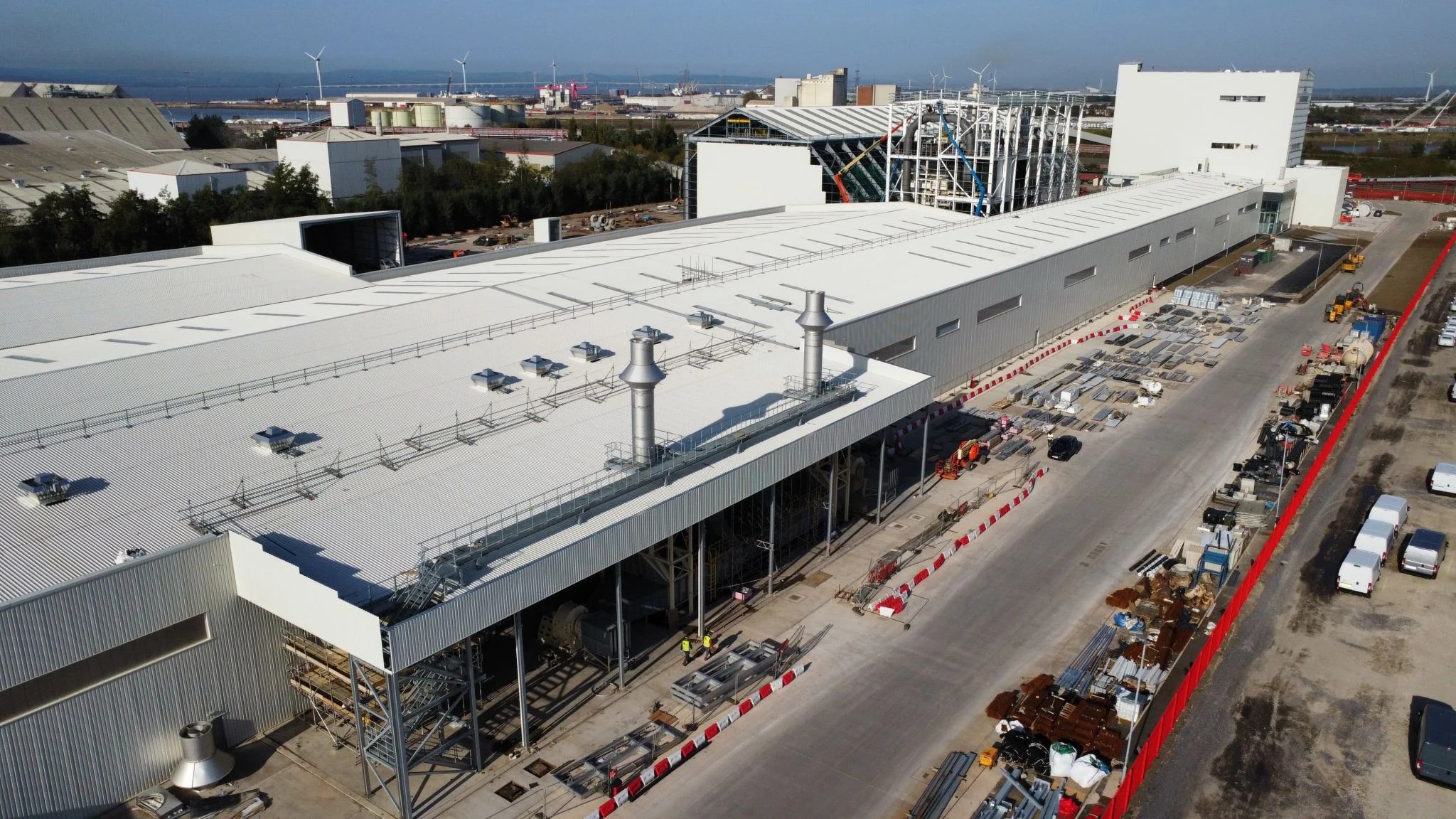
Roofing the size of a manufacturing campus
Fargo and West Fargo are a real vehicle-manufacturing town. Bobcat builds compact loaders and excavators here, CNH runs a large tractor and agricultural-equipment operation, and a deep bench of metal-fabrication and component suppliers feed them from the West Fargo industrial park and the plants strung along the I- corridors. The roofs over those operations are measured in acres, not squares, and a reroof on one of them is a logistics project as much as a roofing project. We approach these buildings the way the plant engineers do — as a system that cannot stop running while we work on it.
The governing fact on an active plant is that downtime has a number. The facility engineering team can tell you what an interrupted line costs per hour, and that figure shapes every decision we make about phasing, mobilization, and which zone we open on which day. We do not treat that as a constraint to push against; we build the schedule around it. Add North Dakota's weather to a roof this large and the planning gets sharper still, because an acre of open deck and an incoming squall are not a combination anyone wants over a production floor.
Phasing a roof measured in acres
A single manufacturing envelope here can run hundreds of thousands of square feet, and you cannot tear off a roof that size in one motion. We section it into zones, sequence tear-off and new membrane so the open area stays small and always sits over a space that can tolerate it, and stage material delivery to match crane reach, laydown room, and the plant's own truck traffic. Production continues in the adjacent zones while we work the active one, and daily dry-in is confirmed before every shift change so the line below never starts a shift under an open deck. On a roof this large, the difference between a clean reroof and a production-disrupting mess is entirely in the logistics.
For the broad field of these decks we typically run a thick mechanically attached single-ply over polyiso, with the fastening designed to the actual deck and the real wind and snow loads, and tapered insulation worked into zones with documented ponding. Where the structure is load-sensitive we confirm deck capacity before adding insulation thickness — a giant roof has no spare appetite for unplanned dead load.
Ventilation, paint, and process loads
What sits on a manufacturing roof is as demanding as the size of it. Weld smoke and process exhaust drive dense rooftop ventilation, and every fan, make-up air unit, and exhaust train is a curb and a penetration we have to carry and flash. Paint and finishing operations add solvent vapor and fire-suppression requirements that change how we attach the membrane — over and around paint-adjacent zones we plan a hot-work permit with the plant's environmental-health-and-safety team and specify cold adhesive or mechanical attachment instead of torch work, because solvent-based adhesives and open flame have no place above active paint.
- Assembly and fabrication bays — very large field areas where phasing and snow-load fastening drive the plan.
- Paint and finishing zones — hot-work exclusions and adhesive selection coordinated with EHS before any work begins above them.
- Stamping, press, and machining areas — roof-level vibration that the seam and flashing detailing has to tolerate without fatigue.
Vibration and the things that move below the deck
Heavy presses, stamping lines, and large machining centers shake the structure, and that vibration travels up into the roof. A seam or flashing detail that is fine on a quiet office box can fatigue over a press hall if it was welded loose or relied on an adhesive bond at the wrong spot. We account for that exposure in the membrane spec and the welding procedure over press-adjacent zones, favoring fully welded single-ply seams that move as one sheet rather than details that can work loose under constant cyclic load. The goal is a roof that ages on the same clock over the press hall as it does over the warehouse.
Suppliers, just-in-time, and the closeout file
The Tier 1 and Tier 2 suppliers feeding these plants run on just-in-time schedules with even less tolerance for interruption than the OEM, because a missed delivery stops someone else's line too. We work them the same way — document the production schedule, sequence the roof around it, and keep a direct line to the plant's facilities contact every day. And because manufacturers run on records, our closeout is built to satisfy a corporate facilities department: contractor safety qualifications, a site-specific safety plan, the OSHA log summary, warranty registration, a roof-zone diagram with every penetration inventoried, daily reports, permit records, and a photo condition survey — formatted to the plant's standard so it files cleanly.
Automotive manufacturing roofing questions
How do you keep the line running while you reroof?
Production continuity drives everything. We document the shift schedule with plant engineering, map which zones sit over active lines, and phase the work zone by zone so the open area stays clear of production. Dry-in is confirmed before every shift change, with a direct line to the maintenance foreman throughout.
How do you handle hot-work limits over the paint shop?
With a hot-work permit plan approved by EHS before any torch, grinder, or weld goes near paint operations. Over paint-adjacent zones we specify cold adhesive or mechanical attachment so no open flame or solvent adhesive is used above active finishing — a standard planning item, not a surprise.
What membrane goes on a roof this large?
Usually a thick mechanically attached single-ply over polyiso, with fastening designed to the real deck, wind, and snow loads, and tapered insulation in the ponding zones. Paint zones get fully adhered where mechanical patterns conflict with hot-work limits, and we confirm deck capacity before adding insulation on load-sensitive structures.
Do press and stamping vibrations affect the roof?
Yes. Press-hall vibration can fatigue a poorly welded seam over time. We account for it in the seam and flashing detailing over press-adjacent zones, favoring fully welded single-ply seams that move as one sheet rather than details that can work loose.
Can you work on Tier 1 and Tier 2 supplier plants?
Yes, and we treat them like the OEM — often with tighter just-in-time pressure. We document the production schedule, sequence the roof around it, and keep daily contact with the plant's facilities lead so a roofing project never stops a delivery.