
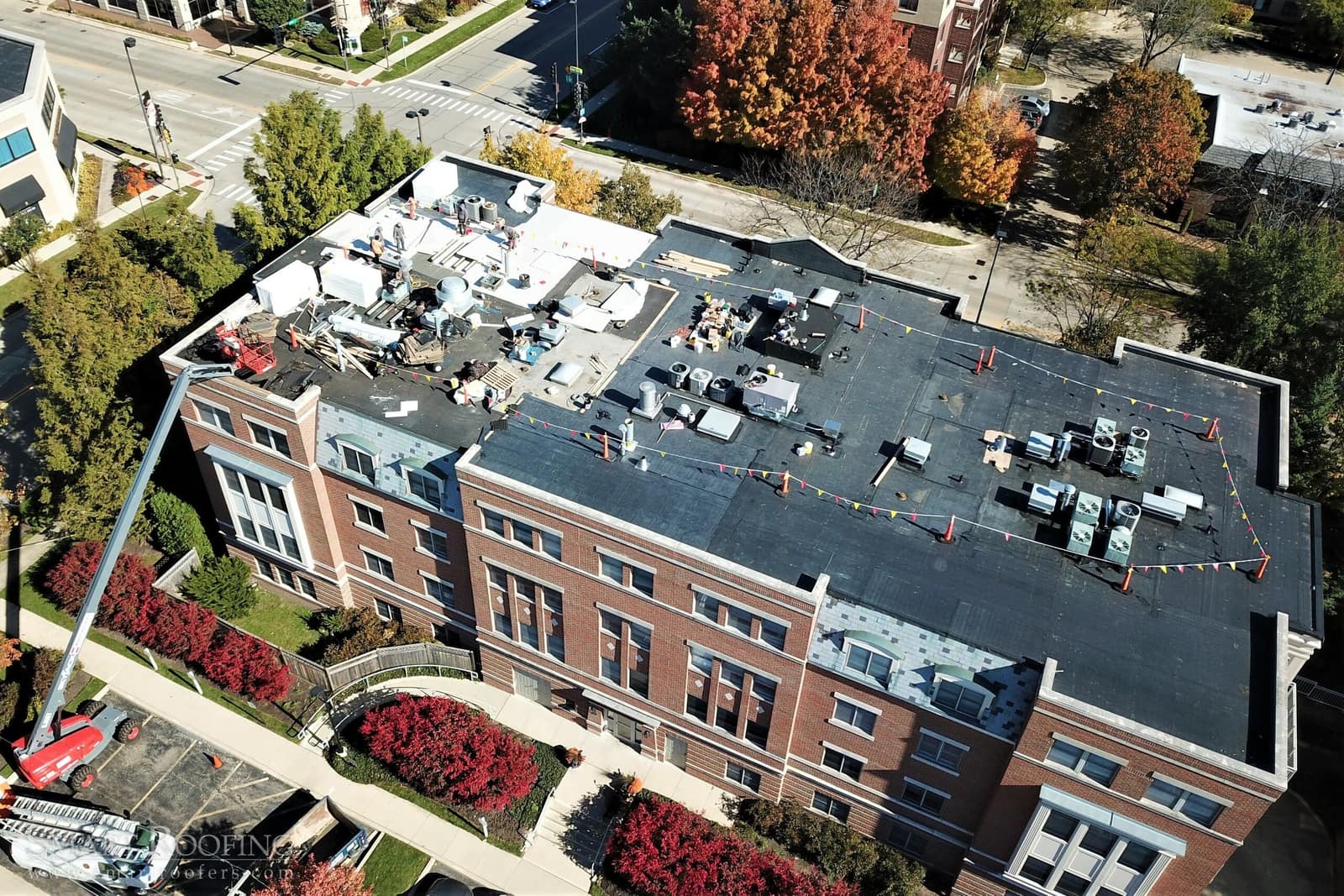
Fargo's multifamily housing market has expanded steadily along corridors like 45th Street South and the West Acres area, drawing real estate investors who recognize the city's low vacancy rates and stable renter demand driven by North Dakota State University and a diversified healthcare and technology employment base. That growth puts roofing at the center of every property manager's budget planning cycle, because the high-desert-like winters followed by aggressive freeze-thaw cycling in spring inflict serious structural stress on low-slope membrane roofs common across apartment complexes built during Fargo's boom years between 1995 and 2015.
The sheer weight of accumulated snow and ice on flat or minimal-pitch roofs is the defining roofing hazard in Fargo. A wet, heavy snowfall can deposit loads exceeding 40 pounds per square foot on uncleared decks, and when melt refreezes overnight it forces water beneath membrane seams in ways that show up as interior ceiling damage months later. Property managers overseeing complexes in neighborhoods like South Pointe or Osgood have learned that reactive maintenance after a bad winter costs far more than proactive membrane inspections every fall before the first hard freeze.
Real estate investors acquiring apartment properties in Fargo frequently encounter roofs that were installed with modified bitumen or TPO systems sized for Code minimums rather than the climate realities of Cass County. Insulation R-values that meet national code thresholds still often fall short of what it takes to prevent the interior heat loss that contributes to ice dam formation at roof edges. A thorough thermal scan performed during due diligence before a purchase can reveal decades of moisture intrusion hidden beneath surface layers that look intact from a standard walk-over inspection.
HOA-governed condominium communities near downtown Fargo face a different set of pressures. Boards are accountable to unit owners who want immediate answers when a roof leak appears above a top-floor unit, and reserve fund adequacy for roof replacement is a recurring point of contention in annual meeting agendas. Contractors who understand the HOA governance structure and can provide phased replacement proposals that align with reserve studies give boards the documentation they need to manage assessments responsibly.
Many Fargo apartment complexes built in the 1970s and 1980s still have original built-up roofing systems that have been patched repeatedly over the years. While some of those assemblies have held up remarkably well given their age, the insulation beneath them rarely meets modern energy code, and the accumulated patch layers add dead weight that stresses the deck. A full tear-off and replacement with a modern TPO or PVC single-ply system, combined with upgraded polyiso insulation, can reduce heating costs measurably in buildings where owners have historically written large checks to Xcel Energy or Cass County Electric every January.
Drainage design matters enormously in Fargo because the Red River Valley's exceptionally flat topography means standing water on rooftops has nowhere to go except through the membrane. Interior drains with overflow scuppers sized for the torrential summer thunderstorms that roll through the Northern Plains are not optional extras—they are fundamental to any roof assembly that will last its warranted service life. Property managers who have dealt with drain backup during a July downpour understand exactly how costly inadequate drainage engineering can be.
Commercial roofing crews working on occupied apartment buildings in Fargo need to stage work in a way that minimizes disruption to tenants, particularly during the compressed shoulder seasons when roofing weather is reliable. The window between reliable spring thaw and the return of fall frost is shorter here than in most U.S. metros, so contractors who can mobilize quickly, work efficiently across multiple buildings in a complex, and sequence the work without forcing residents to vacate units provide measurable value beyond the bid price itself.
Investors evaluating Fargo apartment acquisitions through the lens of the 1031 exchange market increasingly expect sellers to provide documented roof histories including past inspection reports, warranty transfer documentation, and contractor invoices for recent repairs. Lenders on multifamily loans over $1 million routinely require a third-party property condition assessment that includes a roof analysis, and properties with roofs in demonstrably good condition with remaining warranty coverage command better financing terms than those with deferred maintenance histories.
Whether managing a 12-unit walk-up on Eighth Street South or a 200-unit garden complex in northwest Fargo, apartment owners benefit most from roofing partners who understand North Dakota's specific climate demands, can navigate the compressed construction season, and deliver warranty-backed systems that protect the investment through the region's punishing winters. A properly specified and installed commercial roof on a Fargo apartment property can be expected to perform for 25 to 30 years with appropriate preventive maintenance—a timeline that aligns well with standard multifamily hold periods in this market.
- What roofing system performs best on flat-roof apartment buildings in Fargo's climate?
- TPO and PVC single-ply membranes with high-density polyiso insulation are the most common choice for new construction and replacement projects in Fargo. These systems handle freeze-thaw cycling better than traditional built-up roofing and offer heat-welded seams that resist moisture infiltration during spring melt. Proper insulation thickness to prevent ice dam formation at roof edges is equally important as the membrane choice itself.
- How often should a property manager in Fargo schedule commercial roof inspections?
- Twice per year is the standard recommendation—a thorough inspection each fall before freeze-up to catch any membrane issues before they are worsened by snow loading, and a post-winter inspection each spring to assess any damage from ice, freeze-thaw movement, or standing water. Thermal infrared scans every three to five years can identify subsurface moisture that is invisible during standard visual inspections.
- Can an HOA board in Fargo require individual unit owners to contribute to a roof replacement assessment?
- Yes, when reserve funds are insufficient to cover a full roof replacement, HOA boards in North Dakota can levy a special assessment against unit owners as authorized by the community's governing documents and state condo statutes. Well-maintained reserve studies that account for roof replacement cycles on a 20- to 25-year schedule help boards avoid the political friction that comes with unexpected large assessments. Contractors who can provide phased replacement scopes can sometimes reduce the immediate cash requirement.
- What causes ice dams on multifamily roofs in Fargo and how can they be prevented?
- Ice dams form when heat escaping through an under-insulated roof deck melts snow at the center of the roof, and that meltwater refreezes when it reaches the colder eave overhang or parapet area. Increasing insulation R-values at the roof assembly level and ensuring continuous air barriers prevent the heat transfer that drives ice dam formation. Proper drainage design with interior-drain systems sized for snowmelt volumes also reduces the risk of water backup beneath membrane edges.
- How does a roof replacement affect a Fargo apartment property's financing or resale value?
- A recently replaced roof with transferable manufacturer warranty documentation is a meaningful value driver in Fargo's multifamily transaction market, particularly for buyers using agency debt who face mandatory property condition assessments. Roofs with less than five years of remaining estimated life often require lenders to establish escrow reserves, which reduces available proceeds at closing. Documented roof history and warranty coverage can meaningfully improve both cap rate perception and financing terms.
Questions Building Owners Ask
What usually changes the price for acrylic and silicone roof coatings?
For acrylic and silicone roof coatings, access, wet insulation, deck repair, edge metal, drains, temporary protection, after-hours work, and occupied-building staging change the number faster than the roof label. We verify those acrylic and silicone roof coatings conditions around Casselton before treating a square-foot price as reliable.
Can acrylic and silicone roof coatings be handled while the building is occupied?
Often, but the acrylic and silicone roof coatings sequence has to be planned. We review entrances, loading docks, patient or tenant areas, roof access, odor sensitivity, and weather windows near Veterans Boulevard Corridor before recommending daytime, phased, or after-hours work.
How do we know if acrylic and silicone roof coatings should be repair, coating, recover, or replacement?
We look at acrylic and silicone roof coatings through wet insulation, deck condition, attachment, slope, seam condition, drain performance, and edge-metal risk. If the roof around June normal precipitation of 4.29 inches is dry and stable for acrylic and silicone roof coatings, preservation options stay on the table. If moisture or deck damage is spreading through acrylic and silicone roof coatings, replacement planning becomes more defensible.
What documentation do we get after a acrylic and silicone roof coatings inspection?
Typical acrylic and silicone roof coatings documentation includes roof-area notes, photo locations, leak or damage observations, priority levels, repair limits, access constraints, and budget categories. On storm work tied to acrylic and silicone roof coatings, we provide contractor-side roof evidence without promising insurance outcomes.
How quickly can you look at acrylic and silicone roof coatings after a leak or storm?
Timing for acrylic and silicone roof coatings depends on weather, crew load, access, and whether interior water is active. We triage emergency conditions first, especially when water is entering occupied space near healthcare campus roofs, and then separate temporary dry-in from permanent scope.